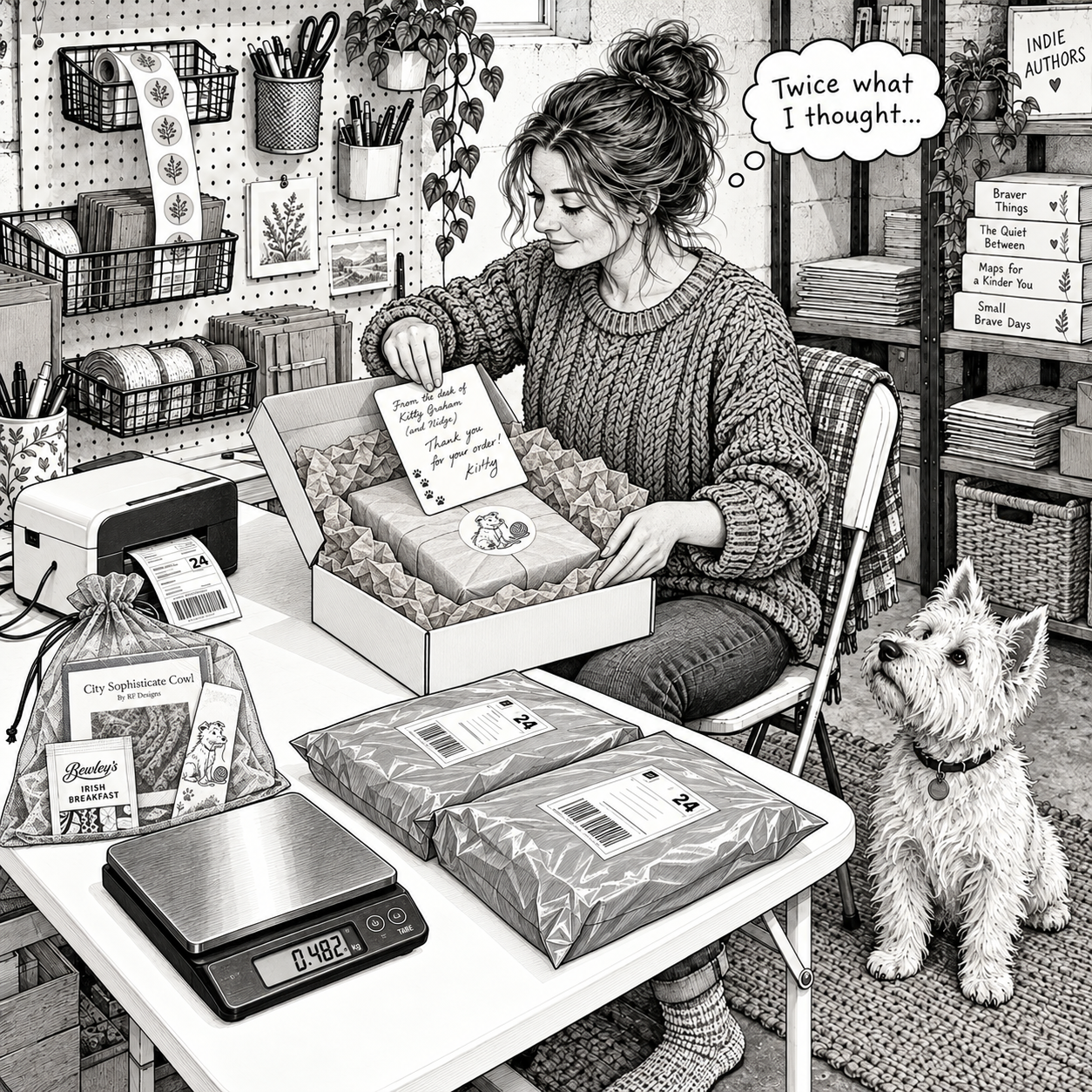
Every indie author course I've ever looked at says the same thing.
Sell direct. Keep more of every sale. Own your reader relationship.
All true.
What they don't tell you is that you'll also become a part-time warehouse, packing station, customer service desk and, occasionally, an accidental customs broker.
I've been selling directly from my website for a while now. Ebooks, an audiobook, signed paperbacks, gift bundles, and a few mugs and mousemats featuring Nidge, the Westie who plays sidekick in my books.
And I love it.
But a few weeks ago, I worked out my real break-even across my whole author business, and I thought it was time to look closely at my online bookshop as well. When I finally sat down and added up what goes into every parcel, I realised I was spending a lot more on my bundles than I thought.
So here's the honest picture. The money, the time, the little costs, and the bit nobody puts in a spreadsheet.
The Part That Actually Pays the Bills
Let's start with the surprise.
The signed bundles get all the attention. They're the pretty photos, the lovely reader messages, the bit I talk about.
But the part of my store that quietly makes the most money is the part I never touch.
My ebooks and audiobook bring in about $400 to $600 a month through my website. Readers buy, BookFunnel delivers the download automatically, and that's it. The odd reader emails because they're having trouble downloading, but it's rare.
My signed books and bundles, meanwhile, swing anywhere from about $120 to $1,000 a month, depending on the season and my ads.
And every direct ebook sale earns me more than the same sale on Amazon. Around $4.50 from my store against about $3.40 from Amazon.
If you're thinking about selling direct, start with digital. It's where the margin is, and it's almost no work.
From My Writing Desk to a Parcel Corner
When I sold my first signed book, I packed it at my writing desk upstairs.
It went into a padded envelope. I weighed it on my baking scales, dug out from the back of the kitchen cupboard. I printed the label on an ordinary sheet of paper, folded it down, and slid it into a clear sticky envelope on the front of the parcel.
It worked. Just about.
Then I started selling bundles.
Suddenly I was keeping track of books, bags, bookmarks, patterns, tea and cards, all in a space that was supposed to be for writing. Pulling the baking scales out every single time became its own small daily misery.
So I moved everything to a dedicated parcel corner in my basement.
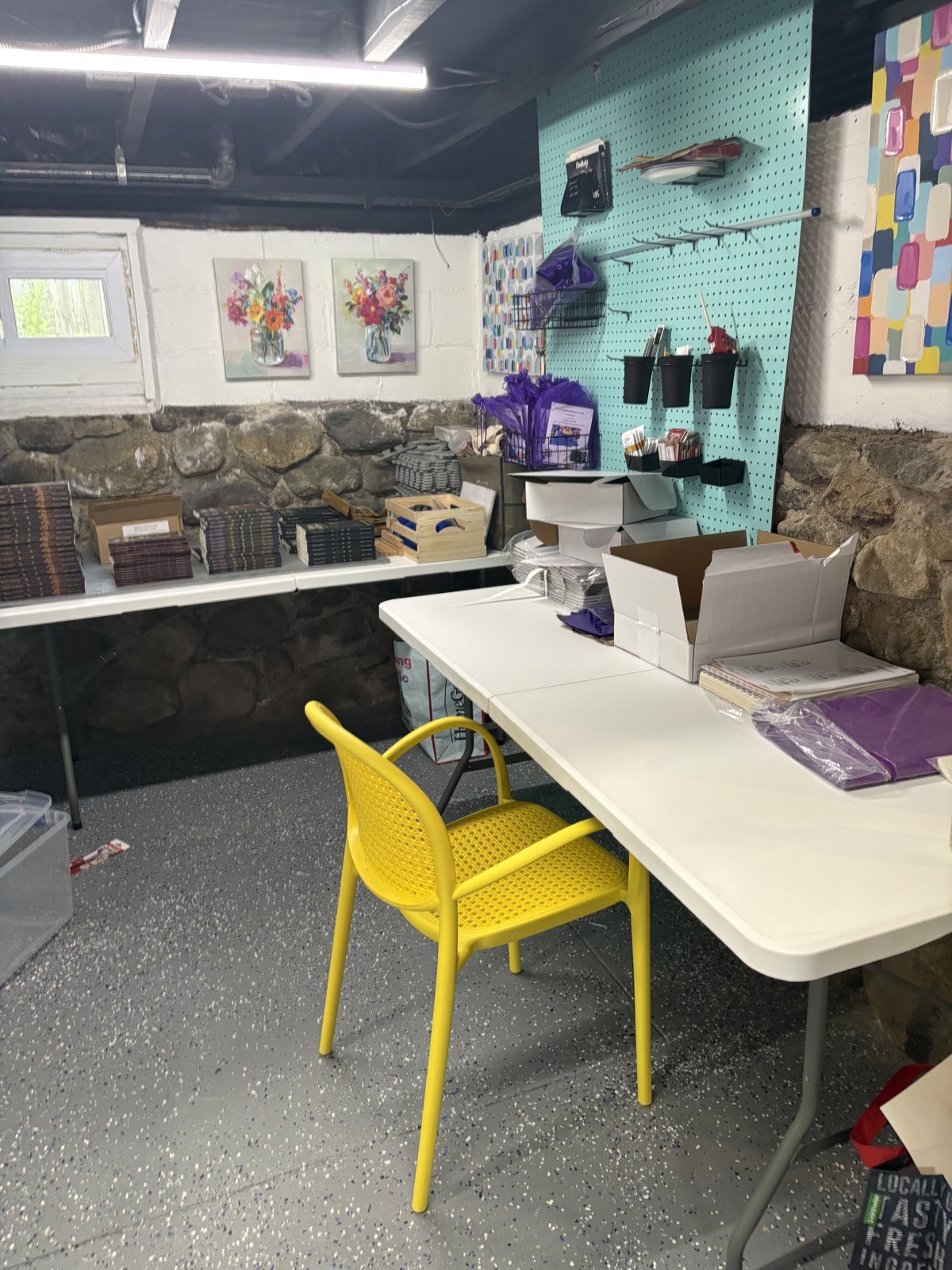
It meant I could buy two things that changed everything:
a proper digital postal scale (I bought this Amazon Basics one for about $35)
a Bluetooth thermal label printer (I bought this Jadens version for about $70)
(These are affiliate links, so I may earn a small commission if you buy through them.)
No more folding paper into sticky envelopes. The label prints straight from my phone, I peel it off, and it's on the box.
For about $100, it was the best money I've spent on the store.
Finding the Right Box
One book fits nicely in a padded envelope. Four books and a bag of extras do not.
It took a surprising amount of trial and error to find a box that held all four books plus the little organza bag of extras, without everything sliding around or the corners getting bashed.
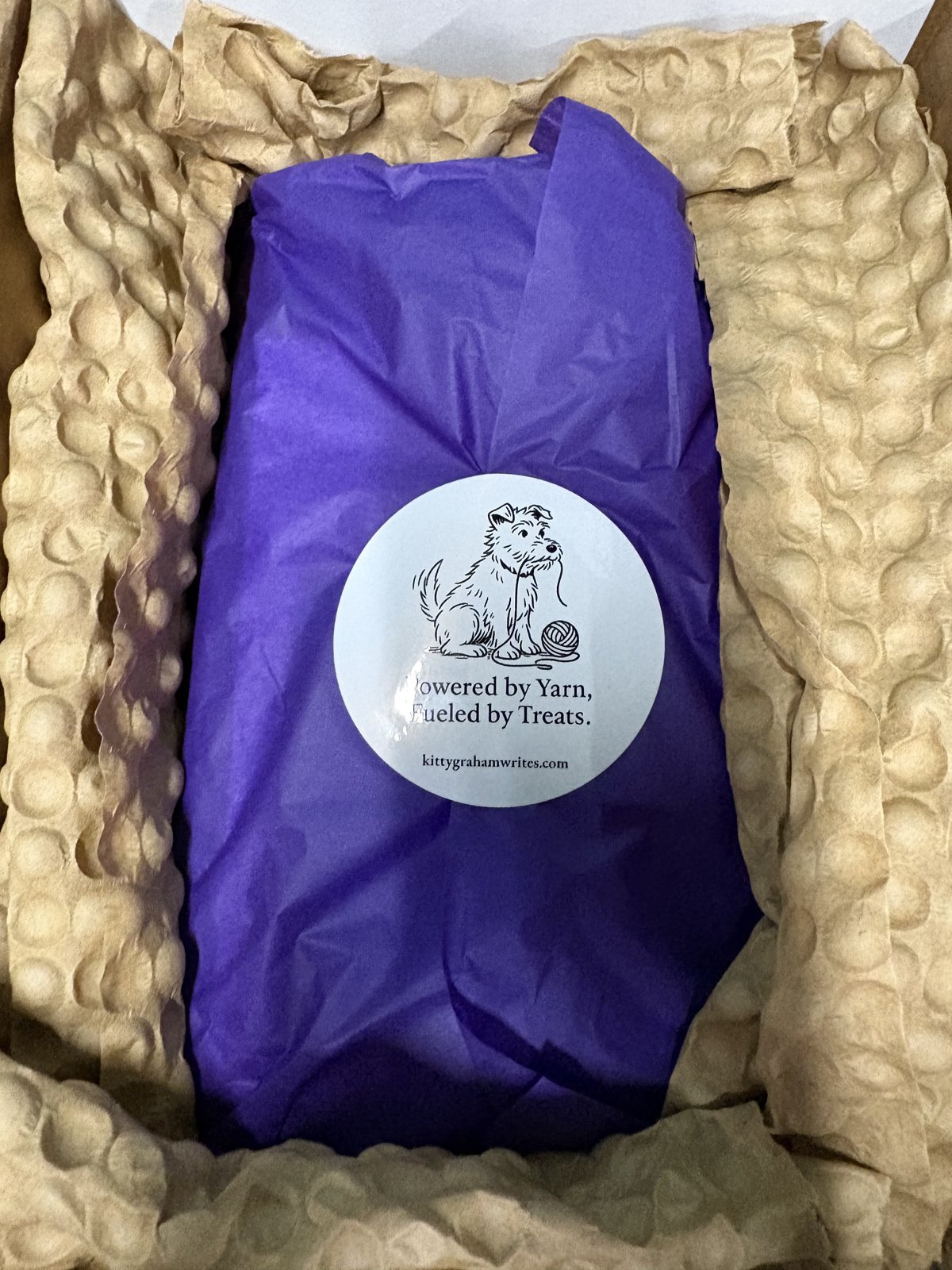
I got there in the end. Now every bundle goes into that box, wrapped in crepe paper, sealed with a sticker, cushioned with paper bubble wrap, and then the whole thing goes into a weatherproof mailer.
What Goes Into Every Bundle
Because I write cozy mysteries set in Dublin, I wanted every parcel to feel like a little piece of Ireland arriving at someone's door.
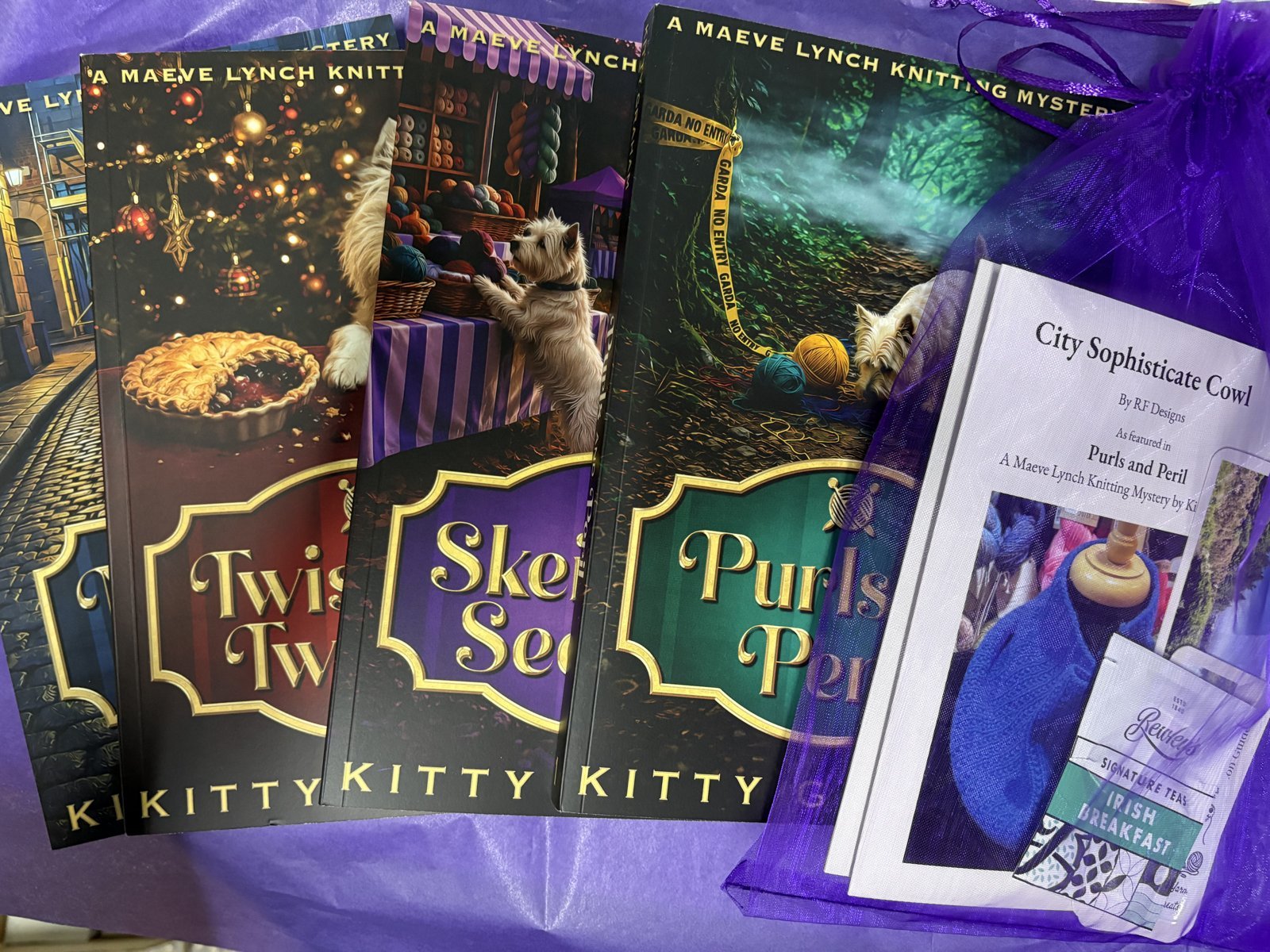
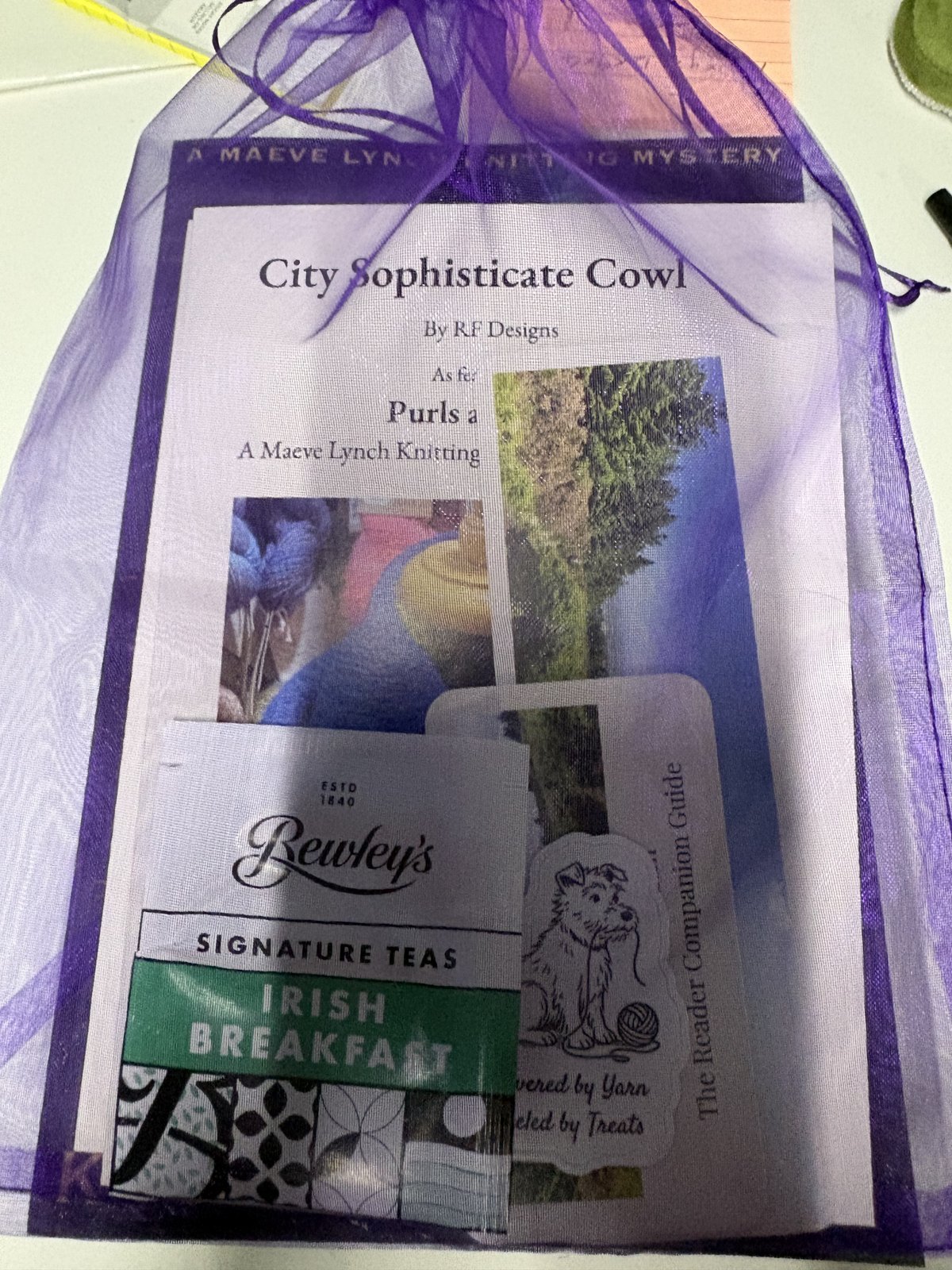
So each bundle includes:
four signed books, personalised
a Bewley's tea bag, because what's a cozy mystery without a cup of tea?
a bookmark
two knitting patterns printed on cardstock, because every book in the series includes one
a small rounded card with a QR code to a secret area of my website, with the real Dublin places that appear in the books
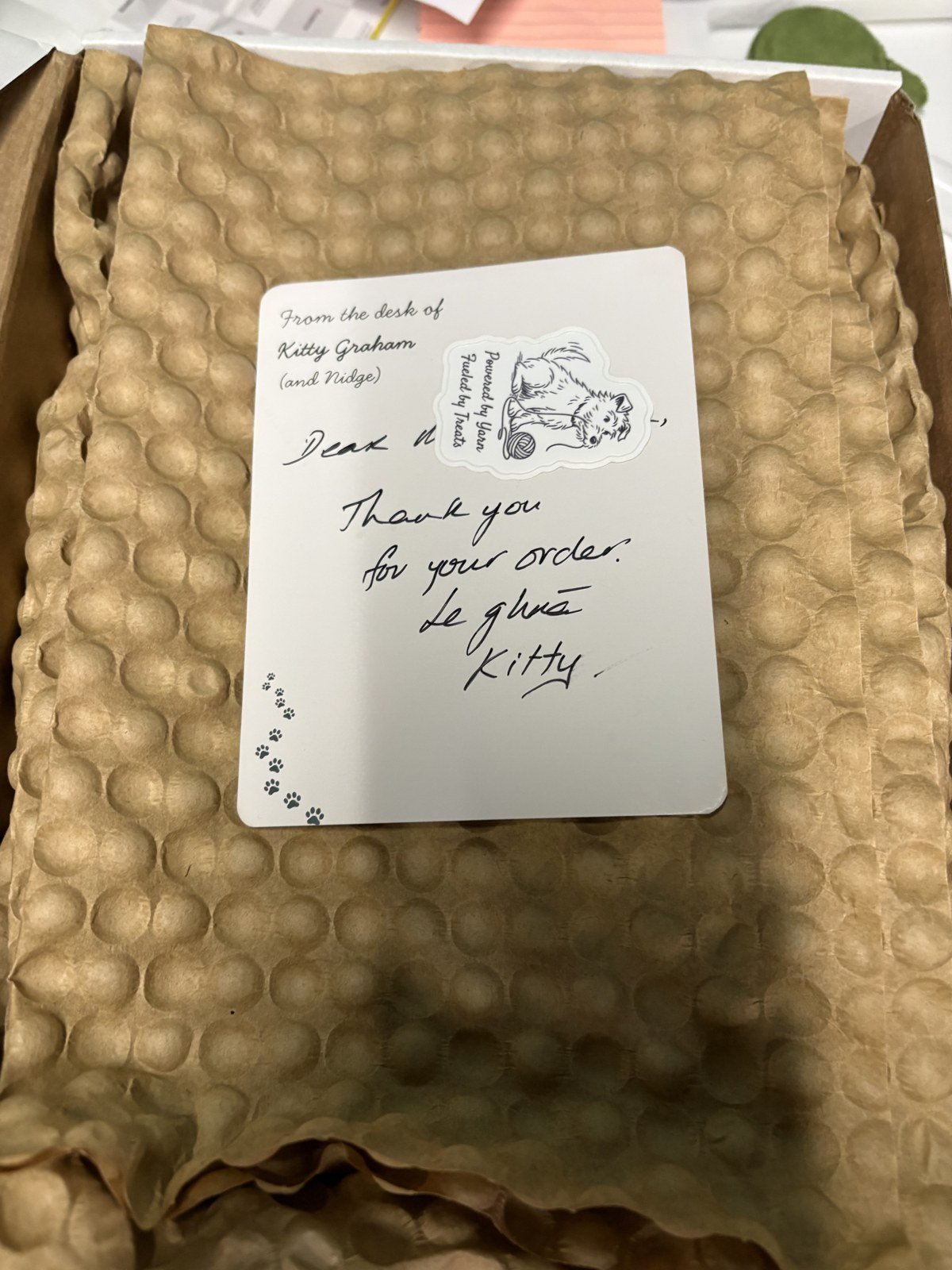
a thank-you postcard "from the desk of Kitty Graham (and Nidge)", with a handwritten note, tucked in at the top
I also sell branded tote bags, mugs and mousemats alongside the books.
And Nidge gets in on every parcel. My amateur sleuth's Westie sidekick is on the sticker that seals the crepe paper ("Powered by Yarn, Fueled by Treats"), on the sticker on the box, and on the thank-you card. Readers who've met him in the books spot him straight away.
Readers love it.
And here's what it actually costs.
What Each Bundle Really Costs
These are the extras and packaging only, before the books and postage:
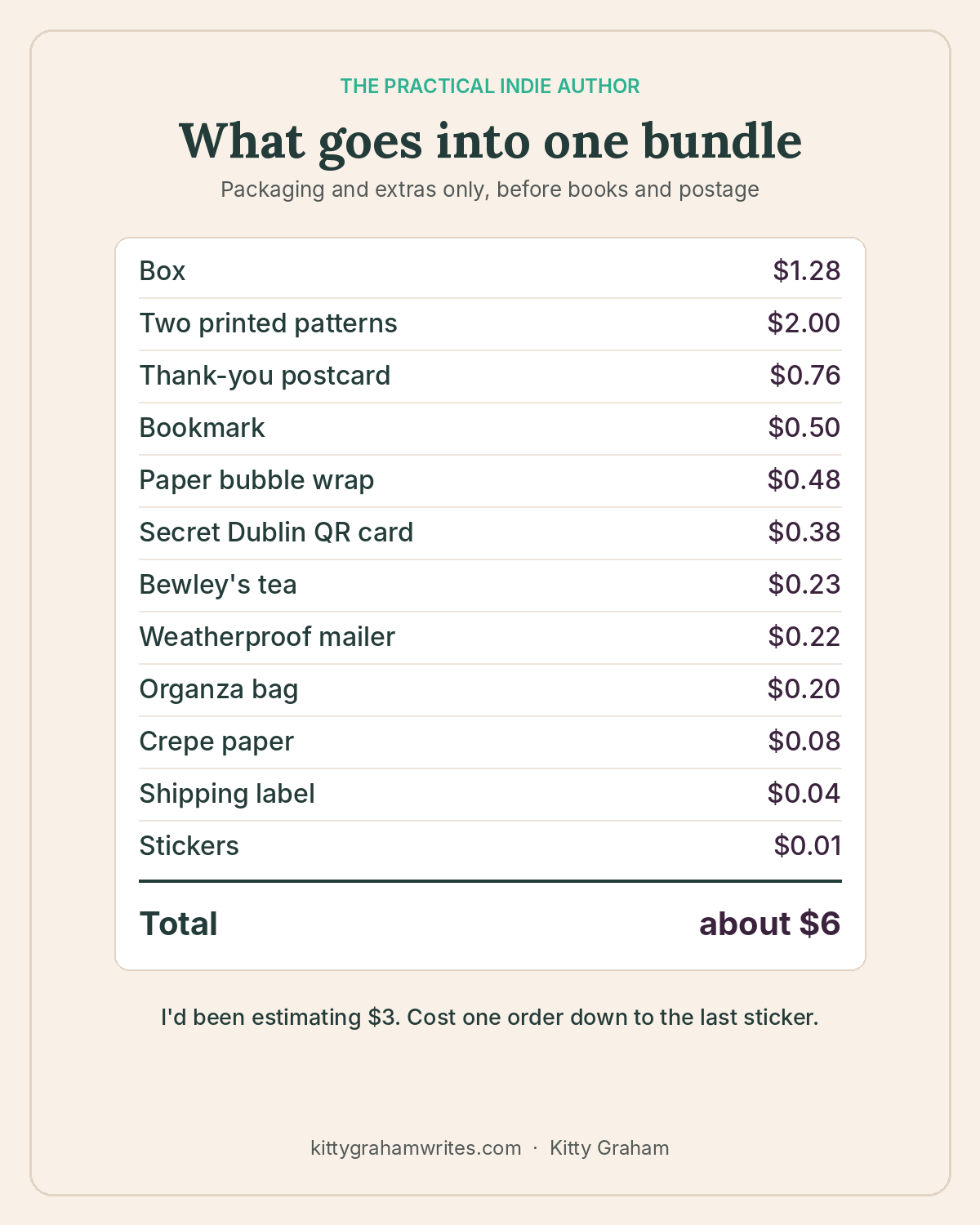
None of these numbers is scary on its own. Four cents for a label. Twenty cents for a bag.
But I'd been estimating my packaging at about $3 a bundle. The real figure is double that.
When I add the books, postage and card fees, a plain US bundle at $59.99 leaves me about $29. A good margin. But about $5 less per bundle than I'd been telling myself.
If you sell physical products, cost out one order down to the last sticker. It's not glamorous, but it's the only way to know.
The Lesson That Saved Me Hours
This is the most useful thing I've learned about running a bookshop from home.
I personalise every signed book. For a while, I signed them as each order came in.
Open the book. Write the reader's name. Write a sentence specific to that book. Add "Happy reading" and "Le grá". Sign.
That was about seven minutes per book. Nearly half an hour for a four-book bundle, before I'd even reached for the box.
Now I pre-write the sentence, "Happy reading", "Le grá" and my signature in a stack of books in advance, whenever I have a quiet evening.
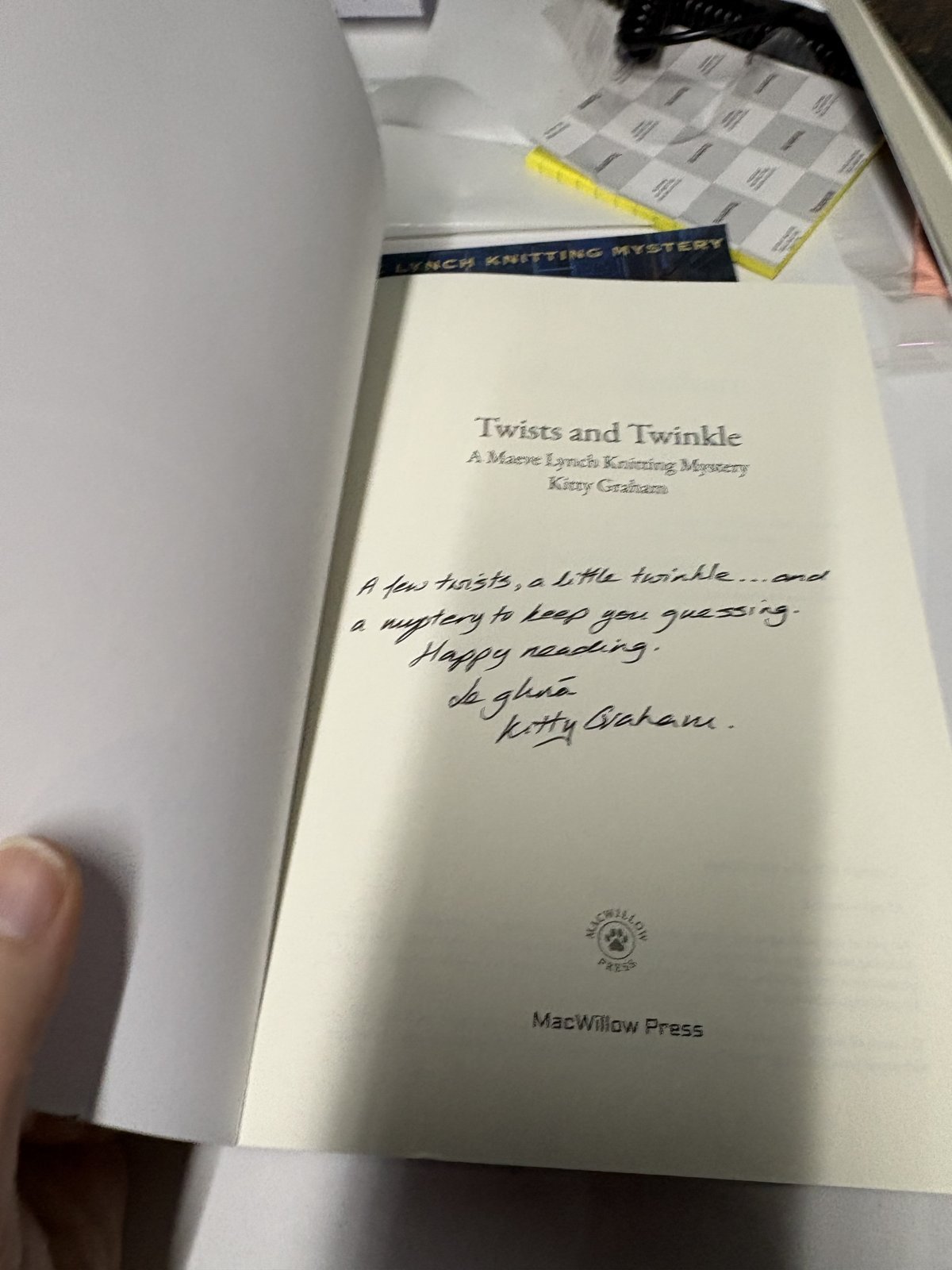
When an order arrives, I just add "Dear" and the reader's name at the top.
Thirty seconds a book.
The packing itself takes about ten minutes once the books are ready. It would be even quicker if I got back into the habit of pre-filling the little organza bags too. (I'm working on it.)
Shipping Without Leaving the House
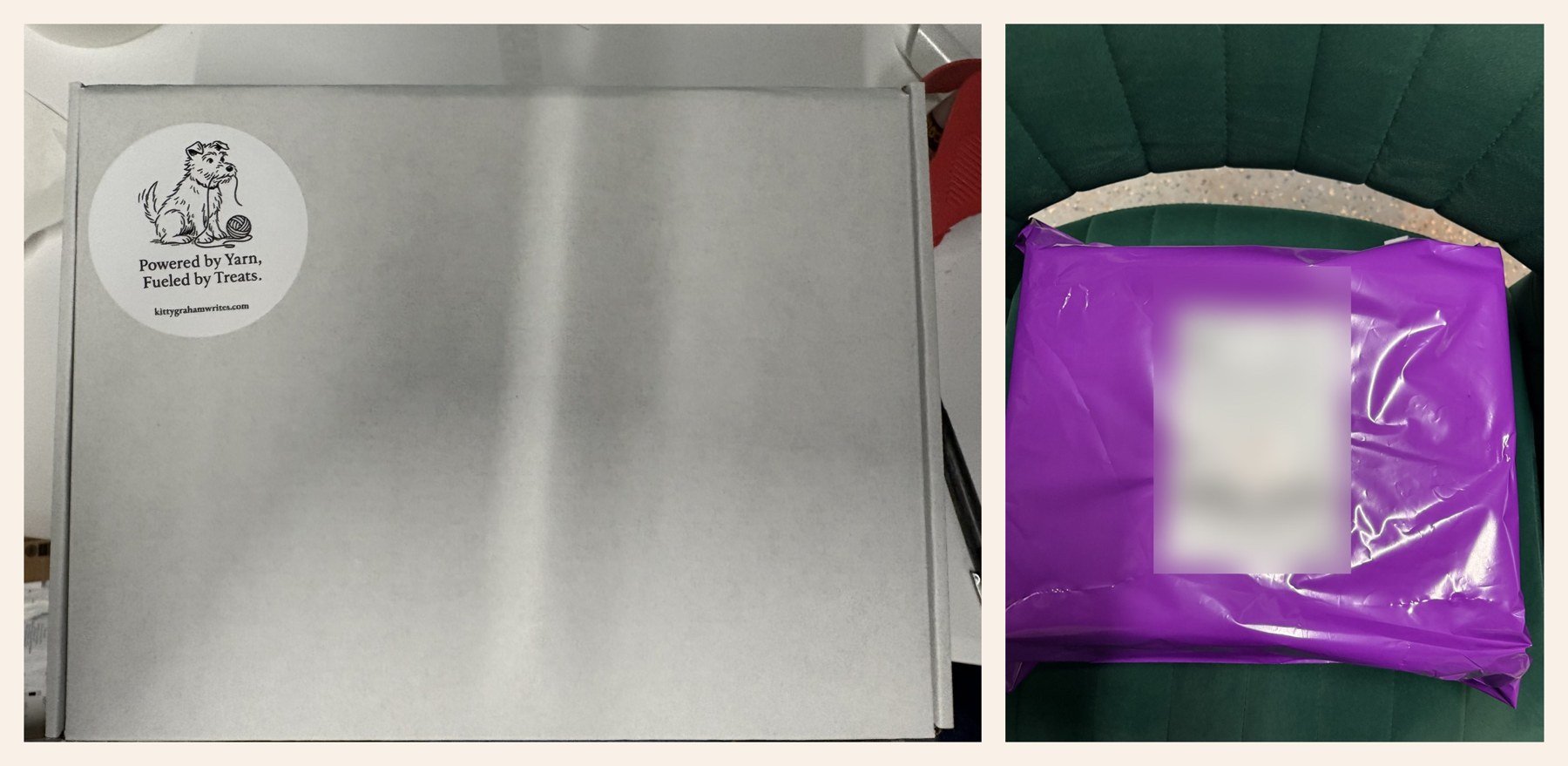
I use Pirate Ship to buy labels, and USPS wherever possible within the US.
And here's the best tip I can give any US author shipping books: USPS will collect parcels from your home for free.
I book a pickup, put the boxes outside my door the night before or first thing in the morning, and they're gone when I next look.
No post office queues. No driving. It's one of the reasons this is manageable alongside a day job.
The Parcel to Canada That Cost Me $55
Nearly all my bundle buyers are in the US but for a while I sold to Canada too.
Then I learned a hard lesson.
I was charging $35 for Canadian shipping. On one order, I sent it by courier, thinking that would avoid customs fees.
It didn't. A separate charge for duties arrived three days later. All in, that parcel cost me about $55 to send.
I'd lost $20 on shipping, on a sale I'd been delighted about.
What I learned, the expensive way:
Couriers clear customs formally and charge a brokerage fee for it, sometimes billed back to you days later.
Postal services (USPS here, Canada Post at the other end) generally don't add brokerage. If tax is owed, Canada Post collects it with a small handling fee.
Never under-declare value or mark a sale as a gift to dodge fees.
I switched Canadian shipping off. However, I'm thinking about bringing it back at $45, sent by post, with any fees on arrival covered by me. But it's one more wrinkle, and I haven't decided yet. I haven't tried shipping anywhere else.
Where My Buyers Come From
Most of my bundles sell through a Facebook ad aimed squarely at new readers.
My ebook and audiobook sales come through Facebook ads too, a mix of ads to people who've never heard of me and retargeting ads to people who've visited my site before.
But my favourite pattern is this one: readers who buy the first ebook, love it, and come back to buy the signed bundle.
That's the moment it stops feeling like selling and starts feeling like a little community.
Stock, Quality and Returns
Stock. I order author copies in advance, usually from IngramSpark because the lead time is much shorter than Amazon's. They're a little more expensive.
Quality. Print quality can differ between IngramSpark and Amazon, which surprised me. Check every batch before it goes into a reader's hands.
Returns. I only accept returns if something is damaged in transit. Because every book is personalised, I can't take back anything that's been signed for someone.
Platform. My shop sits on Squarespace, alongside the rest of my website. I've flirted with Shopify, but for a store my size, I don't need it.
And Then There's the Box
This is the part I can't put a number on.
The four books lined up in order. The crepe paper, sealed with Nidge. The tea. The patterns. The little card leading to a secret map of Dublin. The thank-you note on top.
Two parcels in particular stay with me.
The first started as a mistake. My mistake.
A reader in Canada ordered a single ebook. When the order came in, I noticed she'd filled in a personalisation field. On an ebook. It turned out I'd set up my ebook listings with the same form as my signed books, so it asked every buyer who they'd like their copy dedicated to.
So I emailed her, apologised for the confusing form, and asked whether she'd meant to order something else.
She had. She lived on a sheep farm in Canada, she was helping with a knitting fair, and she wanted a prize for it. What she really wanted was all four books, the pattern, a bag, and a skein of yarn to go with it.
So I made up a special bundle just for her and sent it off to a sheep farm I'll probably never see.
One small customer-service email turned a single ebook into one of my biggest orders. (I also fixed the form.)
The second was a birthday present. My sister asked me to send a bundle to a friend of hers. Her friend came home from work to find the parcel waiting, opened it, and found four books signed to her by an author who just happened to be her friend's sister.
She was thrilled. My sister was delighted. And I was reminded that a parcel isn't just a product. Sometimes it's somebody's gift.
When I put a stack of boxes outside my door for the morning pickup, I'm sending little pieces of Dublin to kitchen tables in places I've never been.
Amazon will never give me that feeling.
Is It Worth It?
For me, yes. But only now that I know what it actually costs.
If you're thinking about selling direct, here's what I'd tell my past self:
Start with digital. Ebooks and audiobooks through a delivery service like BookFunnel are almost pure margin and almost no work.
Give physical orders their own space if you can. A dedicated corner, a postal scale and a label printer cost about $100 and save hours.
Cost one order down to the last sticker. Then compare it with what a retailer pays you.
Pre-sign your books. Personalise at the last minute.
Book free USPS pickups if you're in the US.
Price international shipping before the first order arrives, and use postal services rather than couriers for small parcels.
Make the parcel special. Readers paying extra for signed books want an experience. Give them one.
Selling direct won't replace the retailers for me. Most readers still prefer to buy where they always have.
But for the readers who want something more, my little basement bookshop is one of my favourite parts of this whole strange, wonderful job.
Do you sell direct, or are you thinking about it? Leave a comment below and tell me what's stopping you, or what's surprised you.
Some links in this article are Amazon affiliate links. If you buy through them, I earn a small commission at no extra cost to you. I only link to things I use myself.
