Reader Magnets That Actually Fit Your Books
How readers move from discovering your book to joining your world.
What I’ve Tried as a Cozy Mystery Author (and What Worked Best)
When I started my publishing journey, I had no idea what a reader magnet was. I wrote a book, put it up online, and waited to see if anyone would buy it. At that point, that was enough for me.
Then, as my sales slowly grew beyond my friends and my mother’s reading group, I became curious. I had started writing Book 2 in the series and wondered how I could let readers of Book 1 know there was another story on the way that they might enjoy too.
That was my first real introduction to reader magnets.
I started very small and very simply, and honestly, if I’d had a little more information going into that phase, I could have made things much easier on myself. So this post is my attempt to share what I learned, so you can be me… but better.
Fair warning: not all reader magnets work equally well for every genre. I mainly write cozy mysteries, so that’s the lens I’m speaking from here, but many of these ideas are worth experimenting with no matter what you write.
Also, my goal wasn’t just to collect random subscribers. I wanted to find readers who genuinely connected with my books and wanted to come along for the journey. That distinction ended up mattering far more than I expected.
So let’s get into it.
What Even Counts as a Reader Magnet?
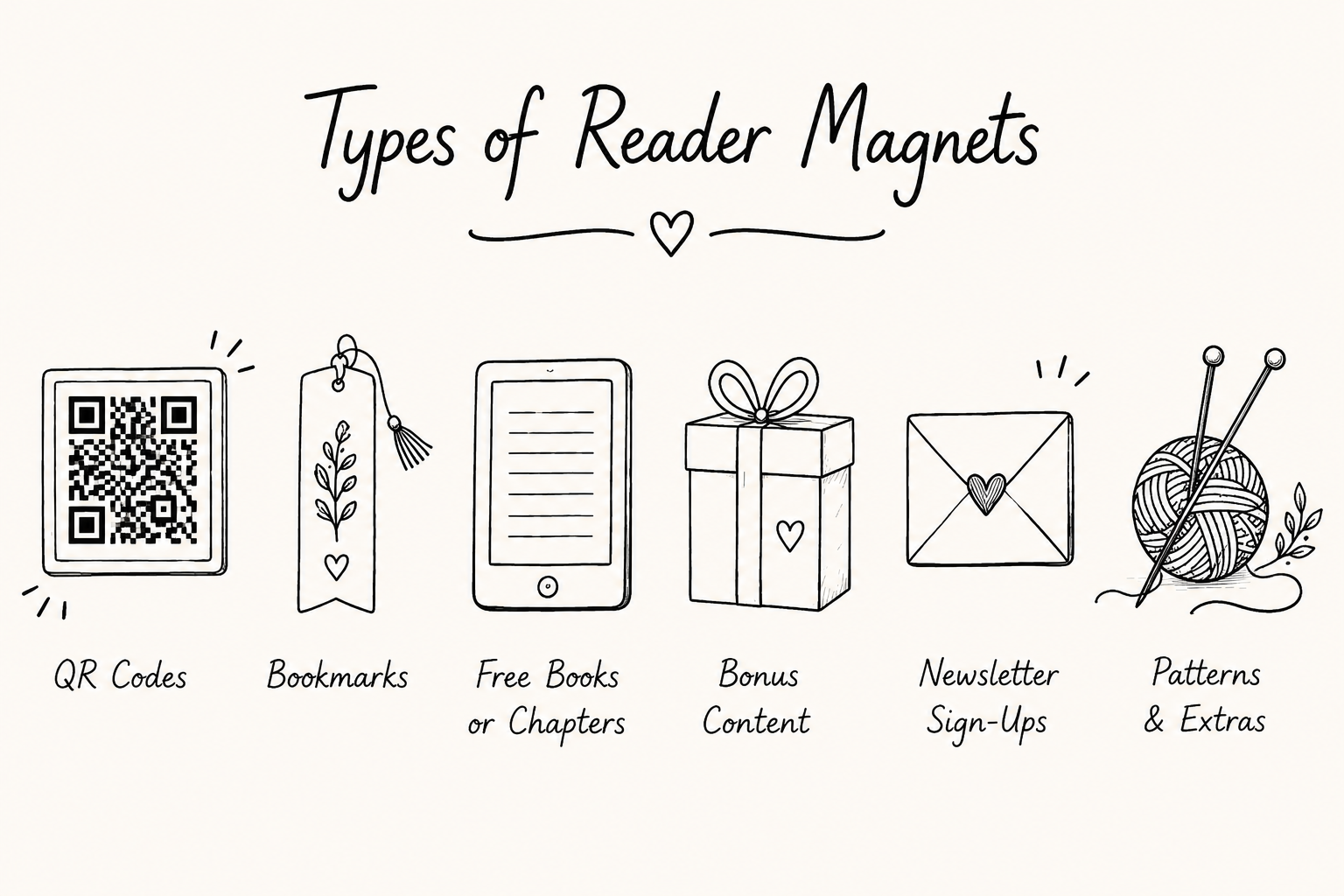
Reader magnets are anything that give readers a reason to join your mailing list. There needs to be a hook strong enough for readers to exchange their email address for it. (Email addresses are key here. Names make things more personal, but they’re not critical.)
They don’t have to be complicated. In fact, simpler is often better. You can use teasers, short stories, bonus scenes, or extras that can’t be found anywhere else. The key is choosing something that genuinely fits your readers and your books.
What I’ve Personally Tried
Manual Lists
My first try was using a sheet of paper at an in-person event. I didn’t even have a list at the time, so I had very low expectations. I was delighted when I got home later that night and typed in 20 names. I felt like I was at the beginning of a new journey.
In reality though, I wasn’t going to be doing that many in-person events, and this wasn’t going to be a practical long-term way to grow my list. So I kept experimenting.
Website Forms
When I set up my website, I put a “Join my newsletter” section at the bottom of the front page. I’ve since moved this up much higher, but I still don’t see that many subscribers coming in from there.
I recently adjusted my website metadata and am re-indexing on Google, so maybe this will help. Realistically though, I don’t expect my website form alone to become a major source of subscribers.
QR Codes on Bookmarks
This is something I still use. I have so many different variations out there, some of which I didn’t set up properly to track, so I have no way of knowing exactly how well they work, but I’d like to think they do.
At any in-person events I attend, I always give away a small swag bag. It usually has a cozy extra like a teabag, an Irish cookie, and a bookmark. The bookmark has two QR codes. One is a signup for my newsletter and the other is a link to buy my first book.
Anyone who buys a physical product from my online store also gets this cozy extra pack.
I think I’ll keep doing this long-term. I like having a cozy giveaway that fits my brand for in-person events and physical sales. Bookmarks are especially appropriate when someone buys a physical book.
Once I exhaust my current supply of bookmarks, I’ll create new ones with trackable links so I can properly measure results. Every day is a school day. And apparently one of mine was “always use trackable links.” 😅
Biggest Takeaway
Physical products can quietly support digital discoverability, especially when they fit naturally with your brand.
Reader Sign-up Swaps
After my previous attempts had landed me only around 100 subscribers, I decided I needed to up my game. I needed a better hook. Something that made readers actually want to sign up.
So I decided to try newsletter swaps.
Newsletter swaps are actually pretty clever. You get to benefit from other people’s subscriber lists, and they get to benefit from yours. You don’t give away or share email addresses. You simply email your readers asking if they’d like to try another author, usually in your genre. The other author does the same for you.
A word of caution on these though. I’ve only done two of them, both in the same month, and I warned my subscribers in advance. I don’t think I’d use this method too often. You might see a lot more unsubscribes, but I definitely think it was worth trying at least once.
My magnet for these swaps was a free book.
This was scary.
I signed up for a “list builder” swap on BookFunnel where I needed a giveaway. I chose my third book since it was a novella and shorter. It was also just after the holidays, so I thought I might just squeak into the “festive nostalgia” hook and capture some readers.
I was stunned by how well this worked.
I didn’t have to reduce the price of my book on any platforms. The only people getting the free book were those who signed up to my list, and I gained over 600 subscribers, more than 380 of whom downloaded the book.
Now, a cautionary word about these kinds of magnets. Lots of people will read a free book. I’m the same. But some of those people are never going to become fans. They’ll unsubscribe once you send your first or second email.
My unsubscribe rate was around 15%.
You can’t be precious. You have to let people leave, knowing they probably weren’t the right fit for your books in the first place. It’s tough, but honestly, it’s a life lesson too. Not everyone loves you. Their loss!
For me, this was the biggest percentage jump in subscribers I’ve had to date. But as I mentioned earlier, I don’t want this to become my main source of new readers because it creates a slightly more “salesy” feel to my newsletters than I’m comfortable with long-term. I try to reserve that tone mainly for my own launches.
So I’m not sure I’ll do this again anytime soon.
Biggest Takeaway
Big subscriber jumps don’t automatically mean long-term engaged readers. Quality matters just as much as quantity.
Bonus Content in the Back Matter
What did I learn from the swap experience? Mainly that readers usually need a reason to subscribe.
So I took that lesson and tried to recreate it in my own books.
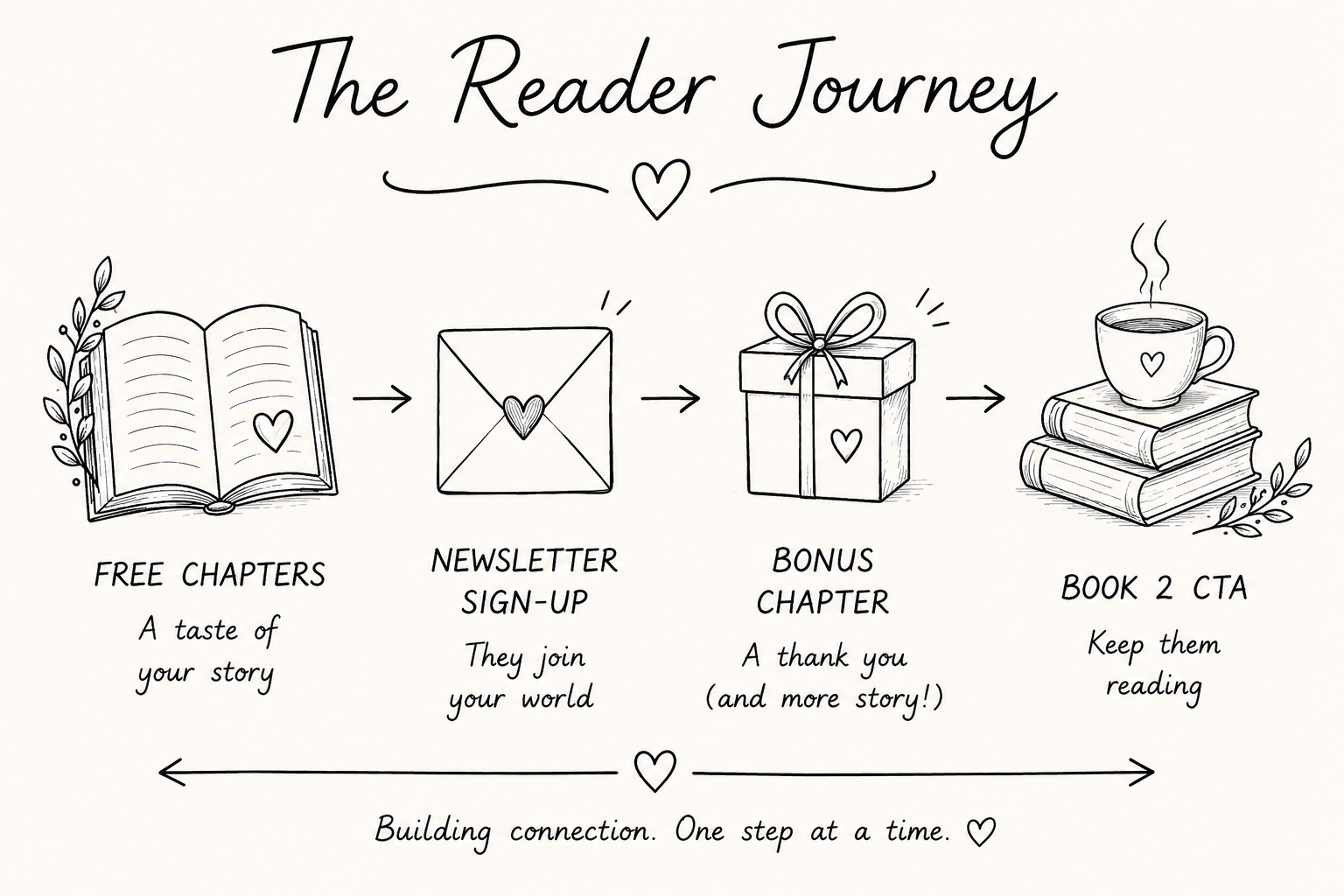
First, I added a bonus chapter to my novella. It was a short and sweet extra that has attracted over 100 subscribers in the past five months.
Then I experimented with “cozy extras” in Books 2 and 4. Each of my books already includes a knitting pattern, so for this magnet I offered a more detailed version of the pattern in exchange for a newsletter signup.
This one was much less successful in terms of numbers. I think I gained around 10 subscribers across both books. But honestly, it still felt very on-brand for my readers, so I don’t regret trying it.
Book 1 always felt a little unfinished to me, so before I ran a BookBub Featured Deal on it, I added a bonus chapter as a magnet there too.
This one has brought in around 75 subscribers in the past four weeks, so I’m counting that as a success. More importantly though, the bonus chapter includes a CTA for Book 2 to encourage readthrough. Fingers crossed this works too.
In my opinion, this is one of the strongest long-term strategies not only for growing my list, but also for improving readthrough in a series.
Readers who want more will naturally click to download the bonus. That also gives me a much clearer idea of where readers are in my series, which helps later when I’m promoting discounts, launches, or re-engaging inactive subscribers.
I’ll definitely keep experimenting with different hooks and formats though. I don’t want my back-of-book magnets to become predictable. I want them to feel like a fun surprise for readers.
Biggest Takeaway
The warmest readers are often the ones who have already finished one of your books.
Cold Reader Magnets
And finally, my latest experiment.
I decided to attract brand new readers using a free intro to my first book. I created a download containing the first two chapters completely free.
What’s interesting about this approach is that I’m trying to use it for two purposes at once: attracting new readers to the series while also building my newsletter.
Readers don’t actually have to sign up to get the chapters. They can if they want to, but they don’t have to.
This is still a newer area for me, so I’m actively learning as I go. I honestly expected the signup rate to be much lower, but out of 120 people who downloaded the free preview, more than 110 joined my subscriber list.
Unsubscribes have also stayed relatively low so far, under 10%, so fingers crossed.
Biggest Takeaway
Lowering friction sometimes attracts more genuinely interested readers than forcing a signup.
What I’ll Keep & What I’d Do Differently
What worked best.
My cold reader magnet of two free chapters is definitely going to become a permanent fixture for me. I’ll keep changing up the ads and CTAs every few months as downloads slow down, and I’ll continue experimenting with audiences.
As long as the clickthrough cost remains low enough to justify the earnings per reader, I’ll keep this running.
Back-of-book content and QR codes will also stay in my repertoire. QR codes are incredibly flexible. They can be used on bookmarks, flyers, event signs, packaging inserts, or even inside books themselves.
And honestly, I enjoy creating the bonus content. It keeps things fun for both me and my readers.
I don’t think I’ll do another newsletter swap anytime soon though. Maybe next year, but I’ll use them cautiously.
And as for physical signup sheets… I think I’ve said goodbye to those for good. Trying to decipher other people’s handwriting to capture email addresses is far more hassle than it’s worth.
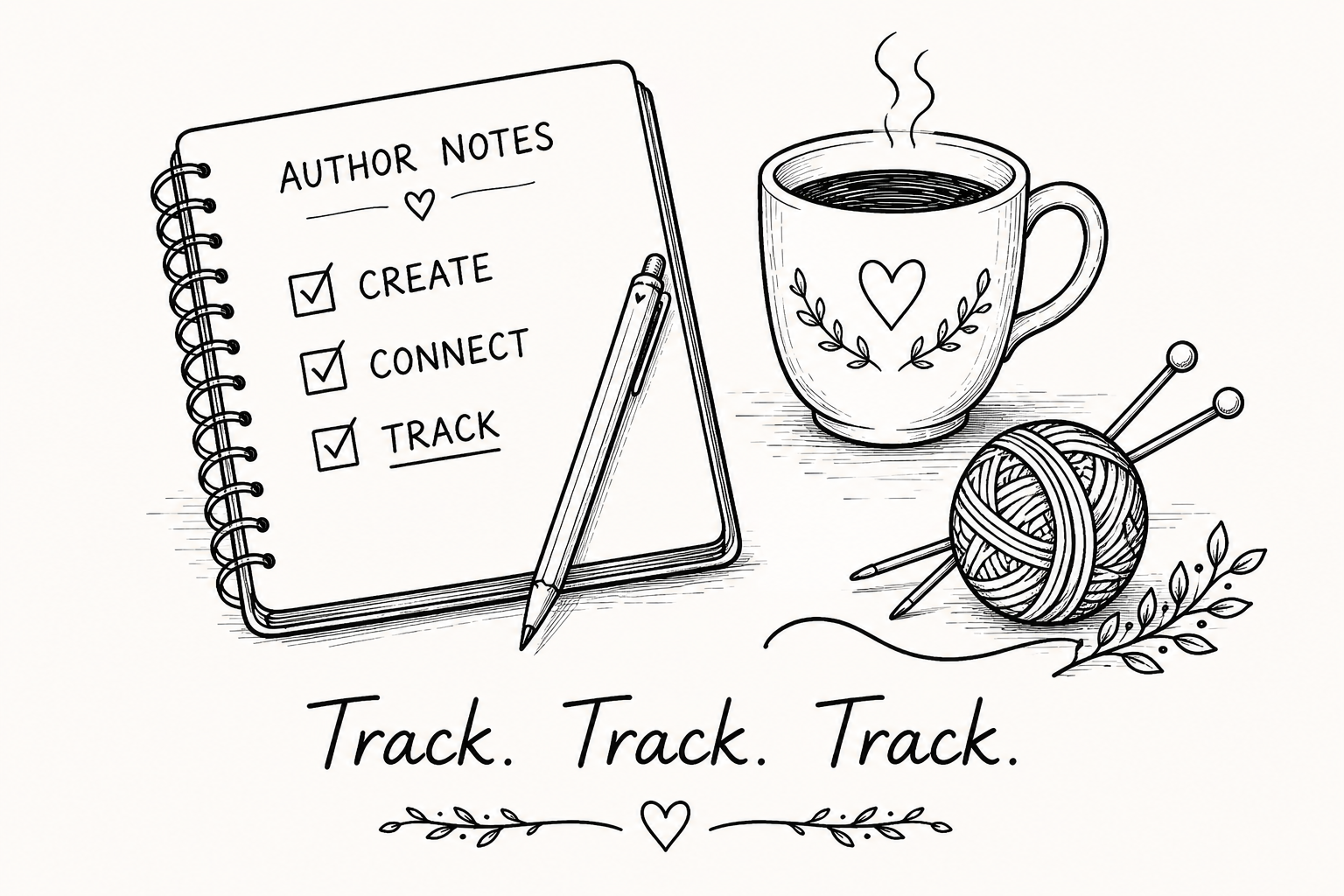
Most of all though, tracking is key.
As I sat down to write this article, I was suddenly faced with all the little mistakes I’d made along the way. It was humbling, but I was learning at the time.
So if you take one piece of advice away from this article, let it be this:
Track. Track. Track.
Key Takeaways
I should have started collecting emails earlier. Back-of-book magnets should have been there from day one.
Just asking people to “join your newsletter” usually isn’t enough. Readers need a compelling reason.
Use trackable links from the beginning.
Don’t obsess over subscriber numbers or unsubscribes. Readers will come and go.
Focus on attracting the right readers, not just any readers.
Tailor your magnets to fit your books and your brand.
Remember the key takeaways.
Want More Practical Indie Author Resources?
If you’re still building your mailing list and author setup, I also have a free guide covering the foundational systems and tools I wish I’d understood earlier in my publishing journey.
And if you found this article helpful, keep an eye out for Part 2 where I’ll walk through the backend systems, automations, and reader nurturing setup I currently use behind the scenes.
