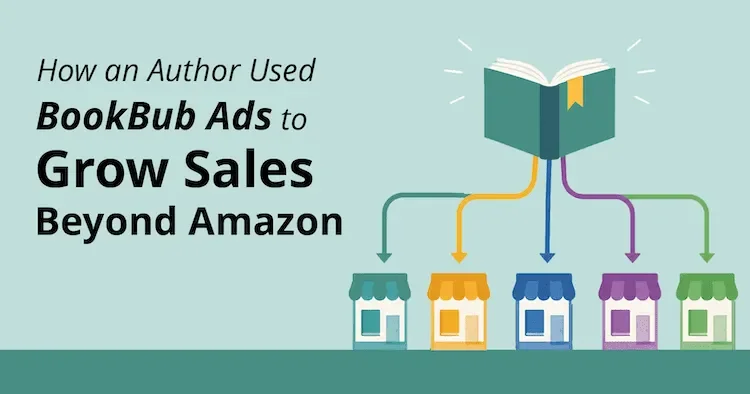
Finding Readers Beyond Amazon

When I started thinking about selling my first novel (I know, scary), I did what most new indie authors do. I researched the self-publishing platforms available and tried to figure out where my books should live.
Like many readers, my experience with ebooks was almost entirely through Amazon. While I'd happily spend every day wandering through independent bookshops if life allowed it, the reality is that most of my book buying happens online. So when it came time to publish, Amazon felt like the obvious choice.
A few months later, readers and friends from around the world started asking whether my books were available anywhere else.
That simple question got me thinking.
What would happen if my books only existed on a single platform? What if Amazon flagged an issue and temporarily removed a title? What if my ideal readers weren't shopping there? And perhaps most importantly, what about countries where Amazon wasn't the dominant ebook retailer?
So I started researching again.
This time, my questions were different.
If I published outside Amazon, how would readers find my books? Did these stores have recommendation engines like Amazon? Could I advertise there? How would I let readers know my books were available on platforms they already used?
The more I researched, the more I realised that publishing beyond Amazon wasn't really the challenge. The challenge was building visibility beyond Amazon.
The good news is that it is possible to find readers outside Amazon. Today, my books are available on multiple retailers, I sell direct from my own website, and I've learned that each sales channel requires a slightly different approach.
But first, let me take you back a few months.
While I was on vacation, I received an email from BookBub asking whether I would be interviewed for a blog post about reaching readers outside Amazon. They'd noticed something unusual about my ads. I wasn't including Amazon links at all.
They wanted to know why.
I had a lovely exchange with them about this, and the resulting article goes into far more detail about the mechanics of my approach.
But if I step back from the tactics and look at what actually moved the needle for me, there are three lessons that stand out.
1. Targeting New Readers, Not the Same Readers Again

My books were already selling on Amazon, so when I decided to expand to other retailers, my first question wasn't, "How do I get more Amazon sales?" It was, "How do I find readers somewhere new?"
When I started running BookBub ads, the platform automatically pulled in my Amazon store links. But that wasn't where I wanted to grow. I wanted to build an audience on Kobo, Apple Books, Barnes & Noble, and the other stores where my books were now available.
So I removed the Amazon links.
The reason was simple. Amazon already had millions of readers, and my books were already visible there. If I was only spending a few dollars a day on advertising, I wanted every click to help me build awareness somewhere new.
By removing Amazon from my retailer list, I wasn't just paying for clicks. I was deliberately putting my books in front of readers on Kobo, Apple Books, Barnes & Noble, and other platforms where I wanted to build my audience. Some readers clicked immediately. Others probably saw my cover several times before deciding to give my books a try. Either way, I was gradually building visibility in places where I had previously been invisible.
And it worked.
At first, the numbers were small, but they were steady. I started seeing regular sales on Kobo, Apple Books, and Barnes & Noble.
2. Different Markets Behave Differently
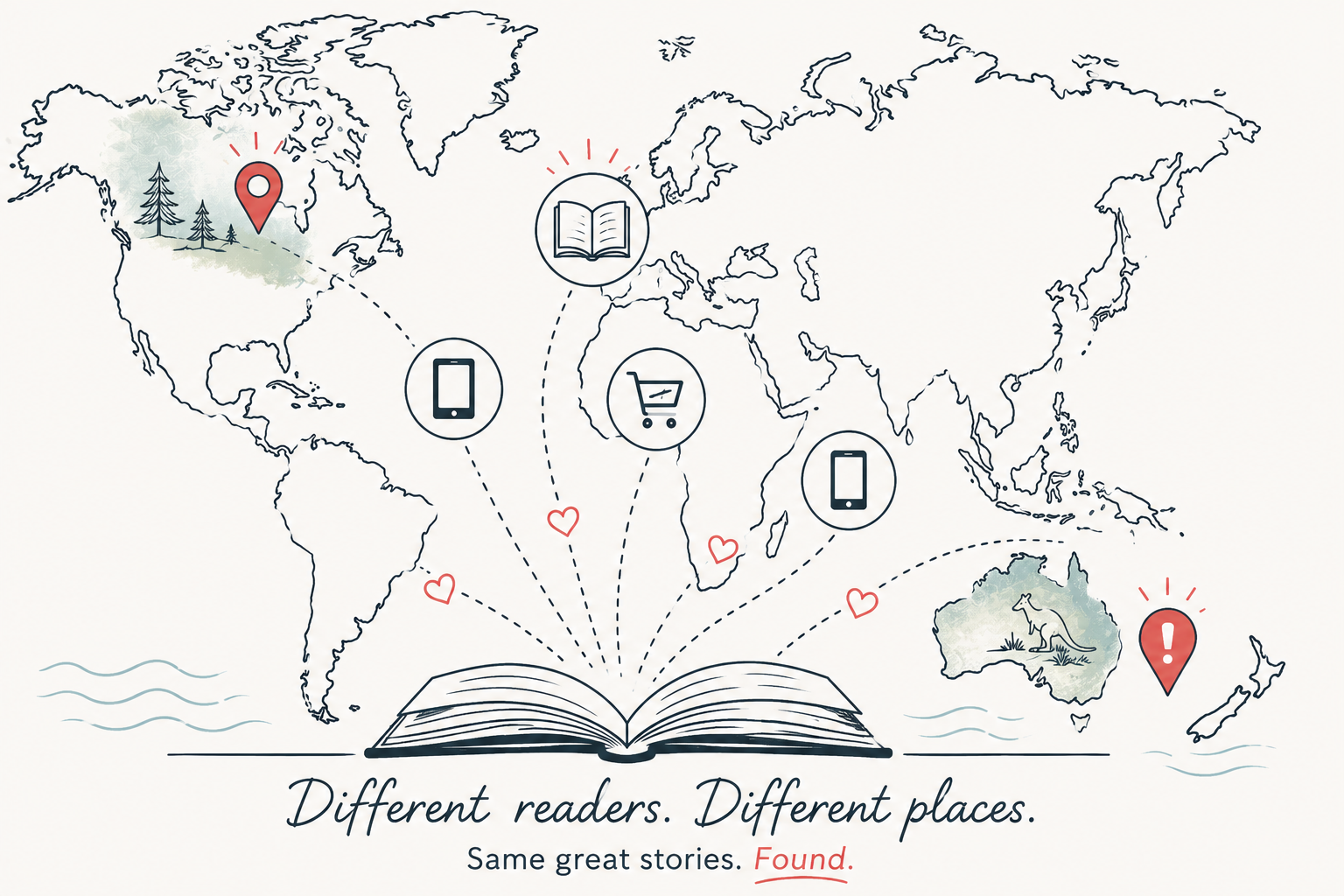
What surprised me most was where those sales were coming from.
My biggest audiences on Amazon were in the US and the UK, but some of my fastest-growing markets outside Amazon turned out to be Canada, Australia, and New Zealand.
Kobo, in particular, has a strong presence in Canada and Australia. Meanwhile, the lovely folks in New Zealand seem to enjoy buying my ebooks directly from my website, which I absolutely adore them for.
Through BookBub and Facebook, I was able to target readers in those markets specifically, helping me reach audiences I hadn't previously been connecting with.
It was an important lesson. Not every retailer serves the same readers, and not every market behaves in the same way.
By looking beyond Amazon, I wasn't just finding new stores to sell in. I was discovering entirely new groups of readers who enjoyed the same kinds of books but preferred to shop in different places.
3. Think About Readers, Not Retailers

Once I started seeing sales outside Amazon, I began paying closer attention to the differences between readers in different markets. The language, imagery, and themes that resonated with American readers didn't always have the same impact elsewhere. Sometimes small changes, such as using "cosy" instead of "cozy" in an ad, helped a reader feel that a book was written with them in mind.
It wasn't about changing the book. It was about understanding the audience I was speaking to.
And what about the outcome of that email from BookBub?
Well, I was recently featured in a BookBub article about reaching readers beyond Amazon. If you'd like to dive deeper into the specifics of my advertising approach and see the full interview, you can read it here:
https://insights.bookbub.com/how-author-used-bookbub-ads-grow-sales-beyond-amazon/
Looking back, I think the biggest lesson I learned from this whole experience is that building an audience outside Amazon isn't really about retailers at all. It's about readers.
Readers don't care whether you sell through Amazon, Kobo, Apple Books, Barnes & Noble, or your own website. They care about finding books they'll enjoy. Our job as authors is to help them discover those books wherever they prefer to shop.
For me, that meant learning how to advertise differently, experimenting with new platforms, and accepting that growth would be slower than simply relying on Amazon's algorithms. But it also meant building a more resilient author business and connecting with readers I might never have found otherwise.
If you're considering publishing beyond Amazon, don't start by asking which retailer to upload to next. Start by asking where your future readers are and how you'll reach them once you get there.
Sometimes, those readers turn up in places you never expected.